Introduction
Many businesses believe that increasing marketing budgets is the only way to generate more leads and sales. However, successful marketers understand that better results often come from making smarter decisions rather than spending more money. One of the most effective ways to improve marketing performance is through Data-Driven Attribution. This advanced attribution model helps businesses understand which marketing activities truly influence conversions. By identifying the channels and touchpoints that contribute most to customer decisions, marketers can optimize campaigns, improve efficiency, and increase ROI without increasing their advertising budget.
What Is Data-Driven Attribution?
Data-Driven Attribution is an attribution model that uses machine learning and customer behavior data to determine how much credit each marketing touchpoint deserves for a conversion. Unlike traditional attribution models that assign credit based on fixed rules, Data-Driven Attribution analyzes actual user interactions and conversion paths. It evaluates how different touchpoints contribute to customer decisions and distributes conversion credit accordingly. This provides marketers with a more accurate understanding of campaign performance and helps them make data-backed decisions.
By analyzing thousands of customer journeys, Data-Driven Attribution identifies patterns that may not be visible through traditional reporting methods. It helps businesses understand which channels influence conversions the most and where marketing budgets should be invested. Marketers can use these insights to improve campaign performance, optimize customer experiences, and increase return on investment. As customer journeys become more complex, Data-Driven Attribution has become an essential tool for making smarter and more effective marketing decisions.
Why Traditional Attribution Models Often Limit ROI
Many businesses still rely on Last Click Attribution, which gives all conversion credit to the final interaction before a purchase or lead submission. While simple to understand, this approach often overlooks the value of earlier touchpoints that influenced the customer journey. Awareness campaigns, social media engagement, content marketing, and SEO efforts may receive little or no credit despite playing an important role. As a result, marketers may invest more in channels that appear successful while underestimating channels that actually contribute to conversions. This can limit overall ROI and reduce campaign effectiveness.
How Data-Driven Attribution Reveals High-Performing Channels
One of the biggest advantages of Data-Driven Attribution is its ability to identify the channels that genuinely drive results. Instead of focusing only on the final interaction, it evaluates every touchpoint involved in the customer journey. This allows marketers to understand which campaigns create awareness, generate engagement, and influence purchasing decisions. By uncovering the true value of each channel, businesses can allocate resources more effectively and focus on activities that deliver the highest return on investment.
Improving Budget Allocation Without Increasing Spend
Increasing marketing ROI does not always require additional budget. In many cases, businesses can achieve better results simply by reallocating existing resources. Data-Driven Attribution helps marketers identify underperforming campaigns and discover opportunities for optimization. Instead of spending more money, businesses can shift their budget toward channels that have a greater impact on conversions. This improves efficiency and ensures that every marketing dollar contributes more effectively to business goals.
Enhancing Customer Journey Insights
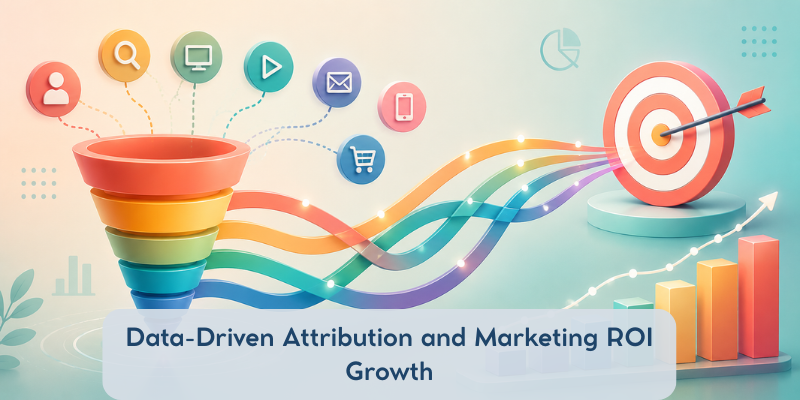
Modern customers interact with multiple touchpoints before converting. They may discover a brand through search engines, engage with social media content, read blog articles, watch videos, and return through remarketing campaigns. Data-Driven Attribution provides a complete view of these interactions and helps marketers understand how customers move through the buying journey. These insights enable businesses to create better experiences, deliver more relevant content, and optimize customer engagement throughout the conversion process.
Using Data-Driven Attribution for Smarter Campaign Optimization
Campaign optimization becomes much easier when marketers have accurate data about customer behavior. Data-Driven Attribution reveals which campaigns contribute to conversions and which ones require improvement. This allows marketers to adjust bidding strategies, refine audience targeting, improve ad creatives, and optimize landing pages based on real performance data. Instead of relying on assumptions, businesses can make strategic decisions that increase conversions and improve marketing efficiency.
Why Data-Driven Attribution Supports Long-Term Growth
Many businesses focus on short-term results, but sustainable growth requires a deeper understanding of customer behavior. Data-Driven Attribution helps organizations build stronger marketing strategies by identifying the channels that consistently influence conversions. Over time, these insights enable businesses to improve campaign performance, strengthen customer relationships, and create scalable marketing systems. Companies that use Data-Driven Attribution are often better positioned to adapt to changing customer behaviors and market conditions.
The Role of Analytics Skills in Modern Marketing
As digital marketing becomes increasingly data-driven, professionals need strong analytical skills to interpret performance metrics and make informed decisions. Understanding attribution models, conversion tracking, and customer journey analysis has become essential for modern marketers. At Web Wisez, students enrolled in Digital Marketing Classes in Chennai gain practical experience working with analytics tools, attribution models, Google Ads, and campaign optimization techniques. These skills help aspiring marketers understand how to improve ROI using real-world data.
Conclusion
Data-Driven Attribution is transforming the way marketers measure success and optimize campaigns. By analyzing the complete customer journey and assigning credit based on actual customer behavior, this model provides deeper insights than traditional attribution methods. Businesses can identify high-performing channels, improve budget allocation, and enhance campaign effectiveness without increasing spending. For marketers looking to improve ROI and stay competitive in a data-driven world, understanding attribution is no longer optional—it is essential. At Webwisez, Digital Marketing Classes in Chennai help students develop the practical skills needed to understand analytics, optimize campaigns, and make smarter marketing decisions that drive measurable results.
Looking for the Best Digital Marketing Classes in Chennai?